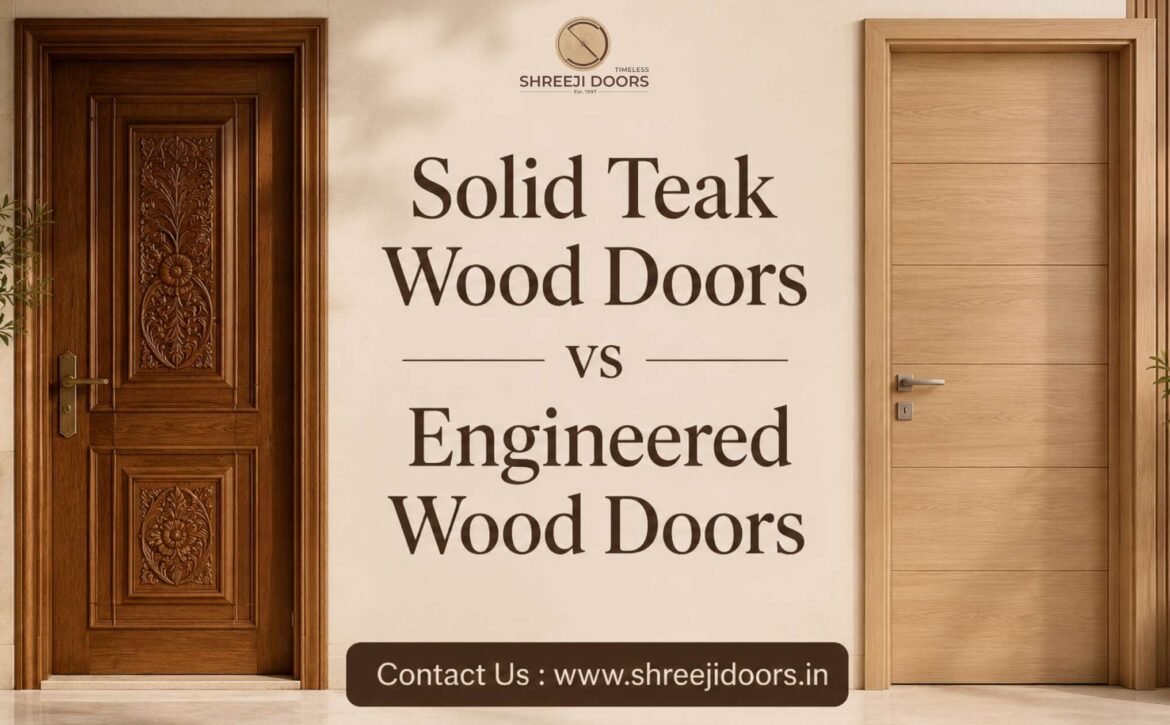
Solid Teak Wood Doors vs Engineered Wood Doors
Choosing the right door material can influence the appearance, security and long-term value of your home. Solid teak wood and engineered wood are two popular choices for entrances, interior rooms, villas and apartments. Homeowners often consult teak wood door manufacturers in Bangalore to understand which option suits their design, budget and maintenance expectations.
Although both materials can be attractive, they differ in construction, durability, moisture resistance, customization and cost. This guide compares them to help you make a confident decision.
What Is a Solid Teak Wood Door?
A solid teak wood door is made mainly from natural teak timber. Teak is valued for its strength, distinctive grain, dimensional stability and natural oils. These oils help the timber resist moisture, insects and everyday environmental exposure better than many ordinary woods.
Each teak door has an individual grain pattern. Manufacturers can carve, shape and finish the timber to create traditional, contemporary or detailed designs.
Main Features of Solid Teak Doors
- Natural timber construction
- Rich grain and warm color
- Strong and durable structure
- Suitable for carving and custom detailing
- Good resistance to moisture and termites
- Long service life with proper care
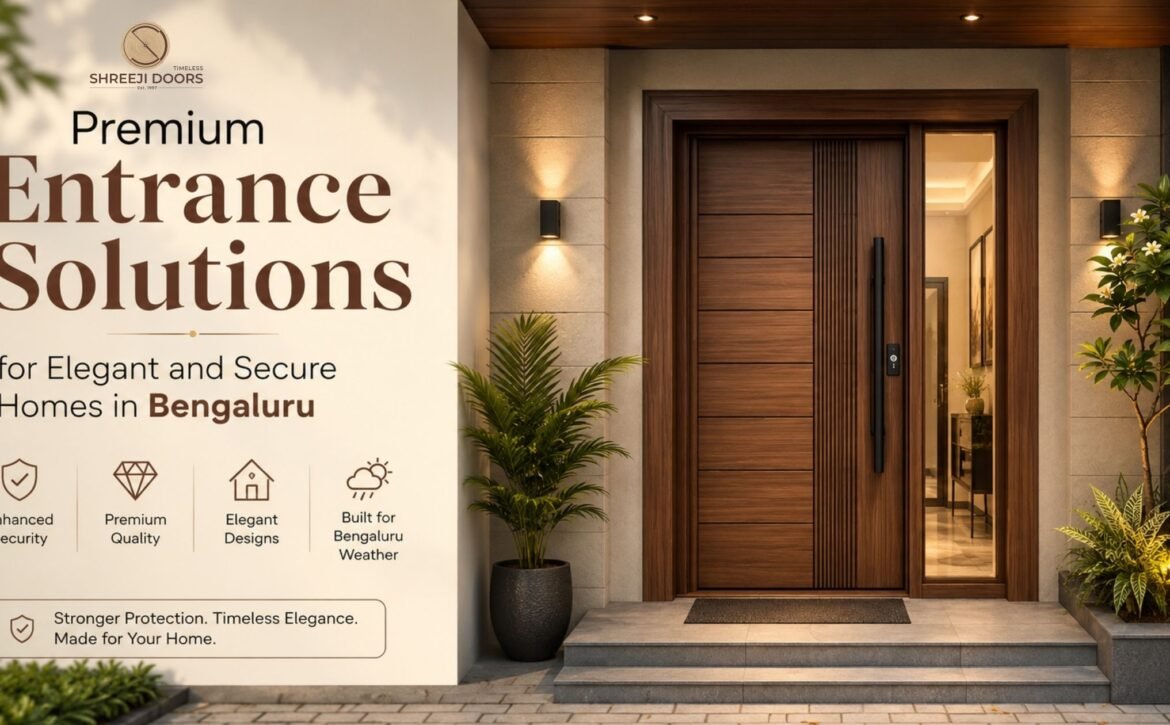
- Premium appearance for main entrances
Solid teak doors are commonly selected for main entrances, pooja rooms, luxury villas and spaces where the door is expected to become an architectural feature.
What Is an Engineered Wood Door?
An engineered wood door is made using processed wood materials instead of a single solid piece of timber. Its construction may include plywood, medium-density fiberboard, high-density fiberboard, particleboard, veneer, laminate or a combination of these materials.
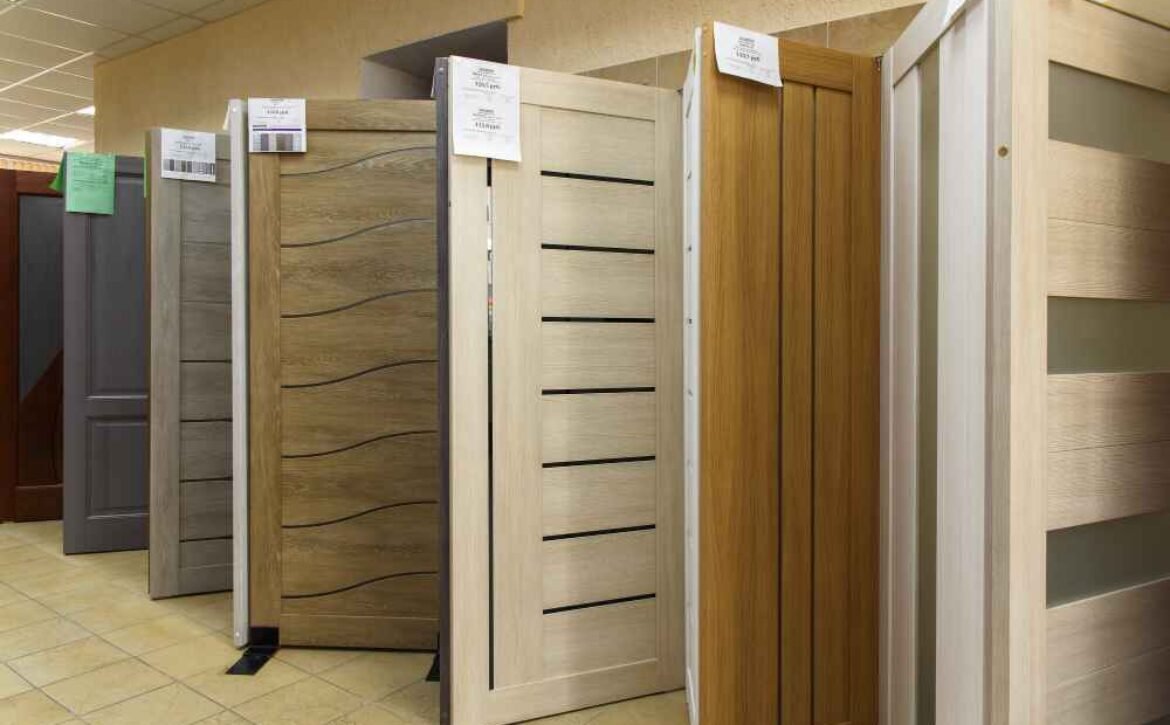
Some engineered doors use an internal core with decorative surface layers. A veneer can create a natural timber appearance, while laminates provide many colors, textures and patterns.
Main Features of Engineered Wood Doors
- Made from layered or composite materials
- Consistent dimensions and appearance
- Usually more affordable than solid teak
- Available in numerous laminate and veneer finishes
- Suitable for standard interior applications
- Often lighter than solid wood doors
- Efficient to manufacture in larger quantities
Engineered wood doors are frequently used for bedrooms, offices, utility rooms, rental properties and projects requiring several doors within a controlled budget.
Solid Teak Wood Doors vs Engineered Wood Doors
1. Strength and Durability
Solid teak is naturally dense and strong. When the timber is properly seasoned and manufactured, it can withstand regular use for many years. Its strength makes it suitable for heavy main doors fitted with secure locks, hinges and hardware.
Engineered wood can perform reliably, but durability depends on its core, adhesive and surface layer. A hollow-core door will not match a high-quality solid-core engineered door.
For an exterior entrance, solid teak generally offers greater structural confidence. For ordinary interior rooms, a well-made engineered door may be sufficient.
2. Moisture and Termite Resistance
Teak contains natural oils that improve resistance to moisture, insects and decay. However, teak still needs correct seasoning, sealing and maintenance. No wooden door should remain continuously exposed to standing water or severe weather without protection.
Engineered wood behaves differently according to its composition. Moisture-resistant plywood may perform well, while low-quality fiberboard can swell, lose shape or delaminate after prolonged damp exposure.
When comparing products from wood door manufacturers, ask about timber seasoning, moisture content, core construction, edge sealing and the recommended installation environment.
3. Natural Appearance
Solid teak’s authentic grain creates a premium appearance that printed laminates cannot fully reproduce. Polishing can enhance the natural color while preserving the individuality of the wood.
Engineered doors offer greater visual consistency. Veneer can create a natural-looking surface, while laminate provides predictable colors and patterns. This is helpful when every door in a project needs to match.
Choose solid teak when natural character is a priority. Choose engineered wood when uniformity matters more.
4. Customization and Carving
Solid teak is highly suitable for detailed carving, CNC routing, moulding and handcrafted decorative work. Manufacturers can create floral patterns, religious symbols, geometric designs, modern grooves and customized entrance panels.
Engineered wood can also be routed or decorated, but its ability to support deep carving depends on its surface and core. Laminate doors are usually better suited to clean, simple styles than elaborate traditional carving.
For a personalized main entrance or pooja room door, solid teak normally provides greater design freedom.
5. Cost and Long-Term Value
Engineered wood doors usually have a lower initial cost. They are practical for larger projects, rental properties and interior spaces where several doors are required.
Solid teak doors cost more because of the timber value, seasoning, craftsmanship, thickness, design complexity and finishing. However, a well-made teak door may last longer and can often be refinished or repolished.
The cheapest option is not always the best value. Consider the expected lifespan, location and importance of the door before deciding.
6. Maintenance
Solid teak doors need regular cleaning and inspection. Depending on the finish and exposure, they may occasionally need polishing or recoating. Hinges, locks and seals should also be checked, especially on heavy entrance doors.
Engineered doors with laminate surfaces are generally easy to clean. However, swollen fiberboard or damaged edges can be difficult to restore. Veneered doors need careful maintenance to prevent scratching and moisture penetration.
Which Door Is Better for Each Area?
 Choose Solid Teak Wood for:
- Main entrances
- Luxury villas
- Traditional homes
- Pooja room doors
- Custom carved designs
- Premium renovation projects
- Areas where strength and longevity matter
Choose Engineered Wood for:
- Bedrooms
- Internal office rooms
- Utility spaces
- Rental properties
- Budget-conscious developments
- Projects requiring multiple matching doors
- Spaces where lightweight doors are preferred
Questions to Ask Before Buying
Before placing an order, ask the supplier:
- Is the teak solid, veneered or combined with another material?
- Has the timber been properly seasoned?
- What are the door thickness and final weight?
- Is the engineered core moisture resistant?
- Are the frame and hardware included?
- Can the size, design and opening direction be customized?
- What maintenance will be required?
- Is installation support available?
These questions help you compare actual construction quality instead of judging a door only by its surface appearance.
Why Choose Shreeji Doors?
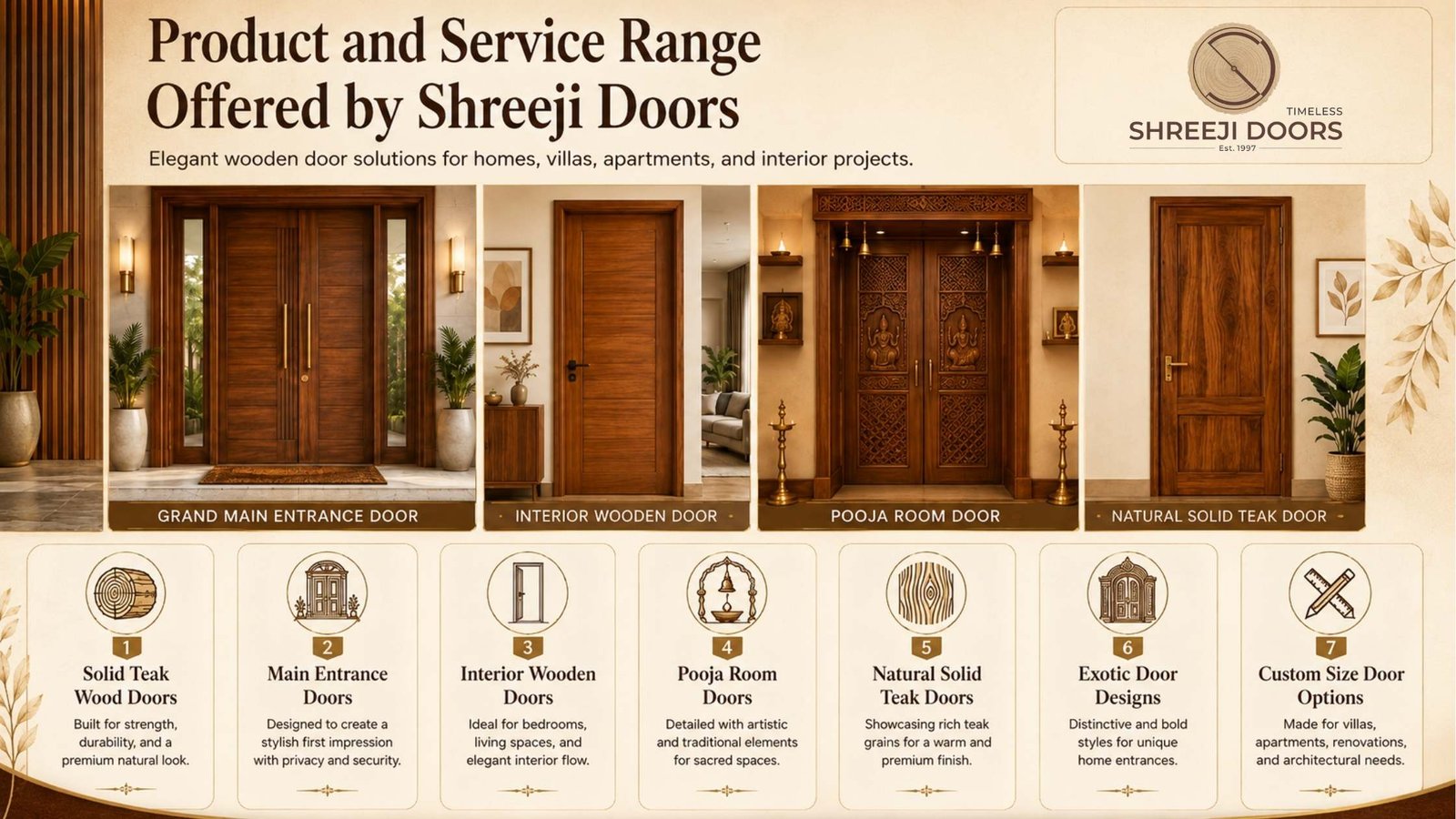
Shreeji Doors offers wooden door solutions for homeowners, architects, interior designers and builders. Its range includes natural solid teak doors, classic carved designs, contemporary styles, exotic doors and pooja doors. Through careful material selection, precise manufacturing, skilled workmanship and customized finishing, the company helps customers select doors that complement their functional and architectural requirements.
By choosing experienced teak wood door manufacturers, customers can receive guidance on sizing, design, carving, finishing and suitable hardware instead of purchasing a generic door without proper support. Shreeji Doors focuses on combining natural beauty, strength, craftsmanship and long-term practicality.
Conclusion
Solid teak and engineered wood doors both have useful applications. Engineered wood is practical for affordable, consistent and lightweight interior doors. Solid teak is better suited to premium entrances, carved designs, pooja doors and projects where natural beauty, security and longevity are priorities. Your final choice should reflect the door’s location, exposure, design style, budget and expected service life.